Industries
Drug testing for construction employers and job sites
Construction employers test for regulatory drivers, client requirements, union agreements, and internal safety culture. Crews are spread across active sites, and clinic trips can burn hours the schedule does not have. When a tower crane is on the clock or a concrete pour is staged, sending a key craft person across town for a screen is not just inconvenient—it can undermine the safety plan everyone agreed to follow.
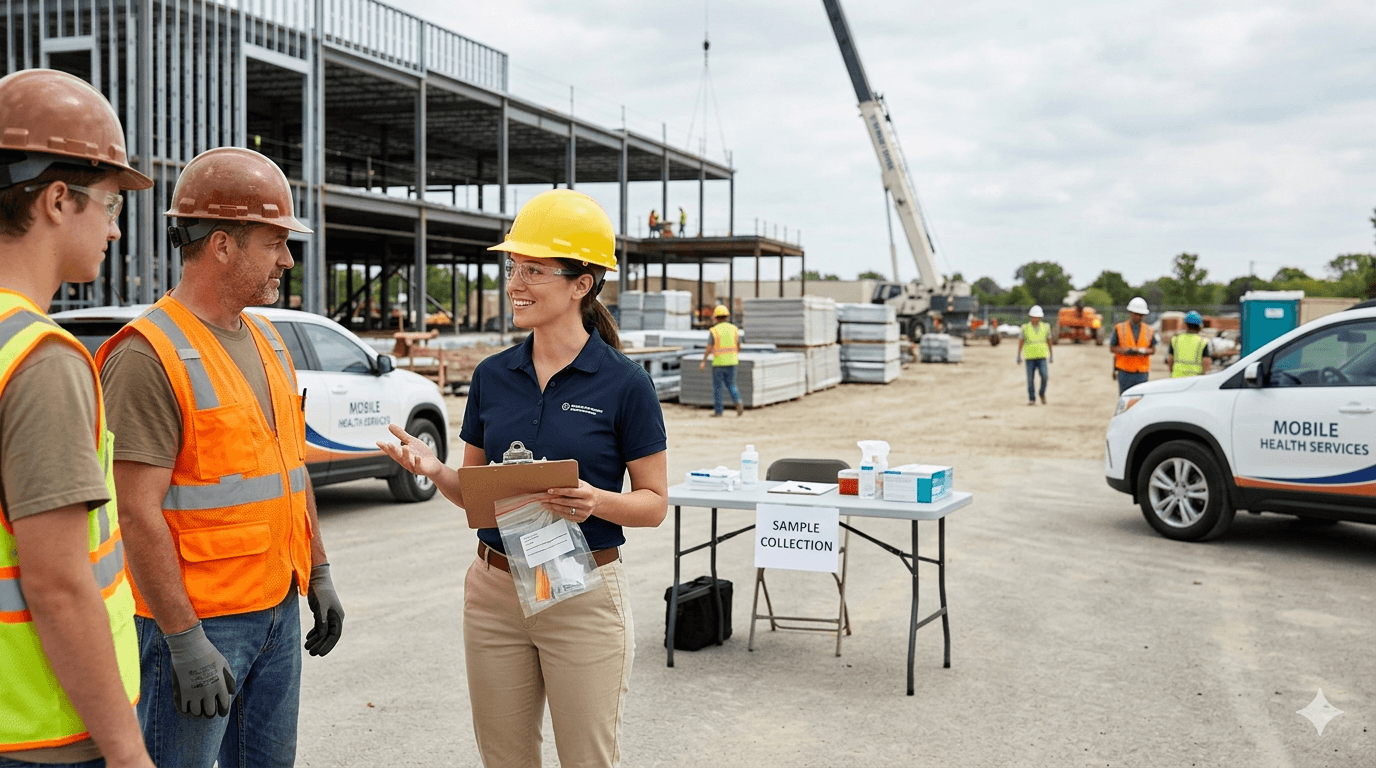
Mobile and on-site collections let superintendents and safety leads keep testing on the program without pulling craft off the job longer than necessary—while still maintaining chain of custody and donor dignity. The goal is site safety with procedural discipline: private staging, clear donor communication, and paperwork that matches whether the person is DOT-covered, non-DOT under your handbook, or on an owner-mandated program.
General contractors and construction managers also face multi-employer complexity: subs, vendors, and owner personnel may share a gate, but each employer still owns its own policy and authorizations. Collections work when each company’s DER or HR path is explicit—who is being tested, under which program, and with which lab routing. We coordinate execution once those orders are clear; we do not merge employers’ legal obligations into a single informal checklist.
Site safety narratives travel fast. A rushed collection with sloppy documentation can become a bigger story than the test itself. Consistent field execution—calm intake, respectful observation rules where they apply, and sealed packages shipped per your TPA—supports the trust your workforce places in the program.
All industries · Employer services overview · Resources & articles · Request a quote
Typical testing needs on construction projects
Reasonable suspicion and post-incident testing spike when equipment, heights, or public exposure raise the stakes. Policies often require prompt testing; logistics matter as much as policy language. Supervisors need a single dispatch path that does not devolve into debating which clinic is open while a window for alcohol testing is closing.
DOT-covered operators (hauling, equipment transport where applicable) may need DOT drug and alcohol collections alongside non-DOT craft under a separate company policy. Random programs—DOT or handbook-driven—need batching that respects gate access, trade stacking, and site safety rules so testing does not create new hazards in the laydown yard.
Large mobilizations, turnaround windows, and owner-mandated screening may require high-volume on-site days with multiple collectors. Hiring surges for a new phase or union referral halls can produce dozens of pre-employment screens in a week; batching on site preserves schedule integrity and keeps security badging workflows predictable.
Site safety committees and incident-review habits increasingly expect documentation that matches the story: who was tested, under which authority, with what specimen type, and how custody was maintained from collection to lab. That is where disciplined mobile execution pays dividends beyond the price per test.
Why on-site and mobile testing works for construction
Job sites change; clinics do not move with the project. Collectors can stage in trailers, site offices, or designated areas once privacy and restroom or observation requirements are addressed. Temporary power, wash stations, and jobsite trailers can be configured to meet collection standards when planned with your safety team—not as an afterthought on the morning of a referral.
Supervisors stay close to production and can manage donor flow, breaks, and trade coordination—reducing no-shows and confusion compared to sending individuals to off-site labs. When everyone knows the staging location and the time window, testing feels like part of the safety system rather than a punishment detour.
Winter enclosures, dust controls, and high-noise environments are normal in this sector. Communicate site conditions during quoting so collectors arrive with the right PPE mindset and so donors are not asked to walk an extra half mile to a makeshift bathroom that fails privacy requirements.
Program types relevant to construction employers
We frequently support post-accident and reasonable suspicion collections, random programs for DOT and non-DOT populations, mobile drug testing, and breath alcohol workflows when alcohol is part of the policy or regulation. Many contractors pair urine or oral fluid policy testing with BAT where alcohol is authorized, especially after qualifying incidents.
Return-to-duty and follow-up plans after a violation add recurring dates to the calendar; field teams should know how those collections will be staged so a sensitive appointment does not become a public spectacle in the break trailer.
Related program pages
Questions from this sector
- Can you test at temporary or remote job sites?
- Often yes. Feasibility depends on access, privacy, safety, and specimen requirements. Share site details in your quote request for planning.
- Do you support multi-employer GC sites?
- Yes, when each employer authorizes its own donors and program rules. Coordination with site security and site leadership is essential.
- What about DOT vs non-DOT on the same project?
- Separate program rules by employee category. We confirm who is covered under which plan before collections begin.
Scope collections for your operations
Share sites, headcount, DOT vs non-DOT mix, and how your TPA routes orders. We respond with practical scheduling and documentation options.