Services
DOT drug testing for employers
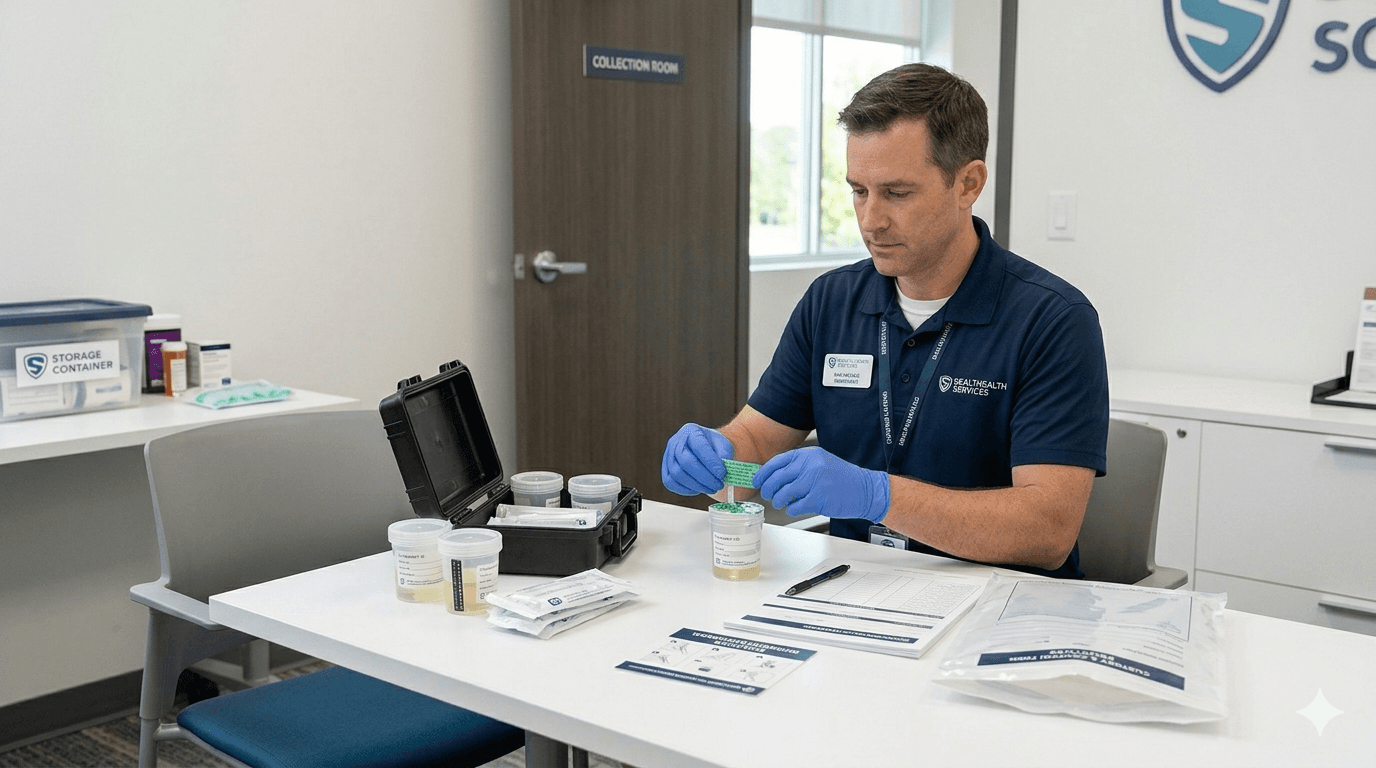
DOT drug and alcohol collections for covered employees follow 49 CFR Part 40 and the rules of your operating administration. We run on-site and mobile visits—urine for many DOT drug tests, breath alcohol where your program requires alcohol testing—with documentation your DER, safety office, and TPA can audit at terminals, yards, or employer-staged sites.
We provide on-site and mobile DOT drug and alcohol collections for covered employees under 49 CFR Part 40 and the modal rules that apply—for example FMCSA for many motor carriers, and FAA, FRA, FTA, PHMSA, or USCG programs where applicable—using the procedures, panels, and custody paperwork your DER and third-party administrator expect. We communicate clearly through the visit so timing and specimen handoffs stay aligned with your order.
From motor carriers to other DOT modes, we align on breath alcohol workflows when your program includes alcohol testing and on how results should route to your consortium or third-party administrator. If you also employ non-regulated staff, pair this page with Non-DOT drug testing and DOT vs non-DOT drug testing so supervisors do not mix programs under pressure.
Headquartered in Illinois, we coordinate on-site and mobile Part 40 collections across selected regions when your order, site access, and timing allow. See service areas for coverage anchors and regional notes on the Midwest or Texas Gulf region—feasibility still depends on location, modality, and scheduling.
What DOT employer drug testing involves
DOT employer drug and alcohol programs cover federally regulated safety-sensitive employees under Part 40 and the applicable modal regulations. Collections use approved procedures and documentation; timing and test type depend on the reason for testing—pre-employment, random, post-accident, reasonable suspicion, return-to-duty, or follow-up—as your DER and TPA define on the order.
DOT drug specimens are analyzed at laboratories certified under the Department of Health and Human Services Mandatory Guidelines—the SAMHSA-administered certification framework employers and TPAs reference when validating lab accounts. Breath alcohol testing is a core part of many alcohol testing workflows under Part 40. Drug testing historically centers on urine for many DOT drug tests; oral fluid drug testing is authorized for certain modes and effective dates your compliance advisors must confirm—never assume a specimen switch without written program alignment.
Direct observation collections
For DOT urine drug tests, direct observation means a same-gender observer watches the donor urinate into the collection container when Part 40 requires it—not for every collection. Return-to-duty and follow-up tests are common cases where observation is mandated; other triggers appear in the regulations (for example, certain specimen integrity situations). Your DER confirms the test reason and whether observation applies; we execute the procedure and custody paperwork once the order matches the event.
Observation rules for oral fluid or other authorized modalities differ from urine. Non-DOT observation follows your handbook and state law, not Part 40. For a compliance-focused overview, see compliance & documentation.
The Role of the Medical Review Officer (MRO)
After a DOT drug specimen is collected and shipped under proper chain of custody, the laboratory performs the testing your program authorizes. When a result is not negative under the applicable rules, additional laboratory steps and review by a Medical Review Officer (MRO)—a physician with defined credentials—ordinarily occur before a verified drug test result is reported through your DER or third-party administrator.
The MRO’s role is to support both scientific accuracy and a fair, documented review path. The MRO may contact the donor in confidence to gather information about legitimate medical explanations when the regulations allow, then issue a verified outcome your program can rely on for employment decisions. That structure reduces ad hoc interpretation at the collection site and aligns the employer with the official result chain your TPA and counsel expect.
Well-run MRO workflows strengthen program integrity: clear verification, consistent messaging to supervisors, and fewer disputes rooted in rumor or incomplete facts. We execute qualified collections and custody paperwork; we do not perform MRO review or substitute for your DER, TPA, or counsel on regulated determinations.
When regulated employers need DOT collections
Common triggers include new hires in covered roles, random selections from your pool, post-incident determinations made under DOT thresholds, supervisor observations that meet reasonable suspicion criteria, and return-to-duty or follow-up plans after a violation.
Your DER is responsible for ensuring tests are ordered correctly. We support execution once the reason and modality are clear.
Who this is for
Safety directors, DERs, fleet managers, and TPAs managing FMCSA, FAA, FRA, FTA, PHMSA, or USCG programs. If you participate in a consortium, we coordinate with the selection and reporting workflow your consortium defines.
Why on-site or mobile DOT collections help
Drivers and safety-sensitive staff are often tied to vehicles, gates, or dispatch. Bringing the collection to the yard or terminal reduces downtime and keeps the process under employer visibility, which many safety managers prefer after incidents or during random blitz windows.
Mobile service can also consolidate paperwork instructions from your TPA so collectors ship specimens and forms the way your random pool administrator expects.
What DERs and TPAs should expect from a field visit
Clear intake: operating administration, test reason, drug and/or alcohol, and whether the donor is DOT-covered for this event. Collectors should not guess modal rules from memory—your order should state what applies.
Consistent outcomes: sealed specimens, BAT printouts or step documentation where required, and handoff instructions that match your lab or MRO path. If alcohol testing is in play, say so at dispatch—Breath alcohol testing logistics differ from drug-only visits.
How DOT collections work with us
We confirm operating mode, covered employee category, reason for test, and required forms. Collectors conduct the visit using DOT-appropriate procedures, complete custody documentation, and package specimens or alcohol testing steps for the laboratory or verification process you designate.
For urgent scenarios, share policy timelines up front so we can prioritize dispatch and set realistic ETAs for supervisors in the field.
Where DOT employers use mobile coverage
Motor carriers with distributed terminals, intermodal yards, maintenance bases, and any site where drivers report for duty are typical. We plan around shift start, line-haul handoffs, and safety meetings when you batch randoms.
Common questions
- Do you handle FMCSA collections only?
We support DOT-regulated employers across modes—tell us whether you operate under FMCSA, FAA, FRA, FTA, PHMSA, or USCG rules so paperwork and procedures match your program.
- Can you coordinate with our random consortium?
Yes. Provide order details and lab routing from your TPA or consortium; we align collection paperwork and shipping with those instructions.
- Is breath alcohol testing included?
We provide breath alcohol testing workflows employers need for DOT alcohol tests, including screening and confirmation steps where applicable. Confirm your specific program requirements during intake.
- When is a direct observation collection required?
For DOT urine tests, Part 40 defines when direct observation is required—it is tied to test reason and specific situations, not every collection. Return-to-duty and follow-up drug tests are typical observed collections. For non-DOT tests, your policy and state law control. Your DER, TPA, or counsel should confirm whether a given order must be observed before we dispatch.
- Do you support return-to-duty and follow-up observed collections?
Yes, when your order identifies a DOT return-to-duty or follow-up (or other authorized) test and observation is required for that event. Tell us the test reason, operating administration, and site constraints at intake so we assign collectors qualified for observed urine collections under applicable procedures.
- Can you coordinate observed collections for DOT programs?
Yes. We conduct DOT-appropriate urine collections, including direct observation when the regulations and your order require it, with forms and custody steps aligned to your mode and TPA. If paperwork does not state observation when the rules say it should—or the reverse—we escalate before proceeding.
Request a quote for this program
Share DOT or non-DOT context, sites, headcount, and timelines. We confirm logistics, specimen type, and documentation expectations with your DER or TPA before collection day.