Services
Employer on-site and mobile drug testing
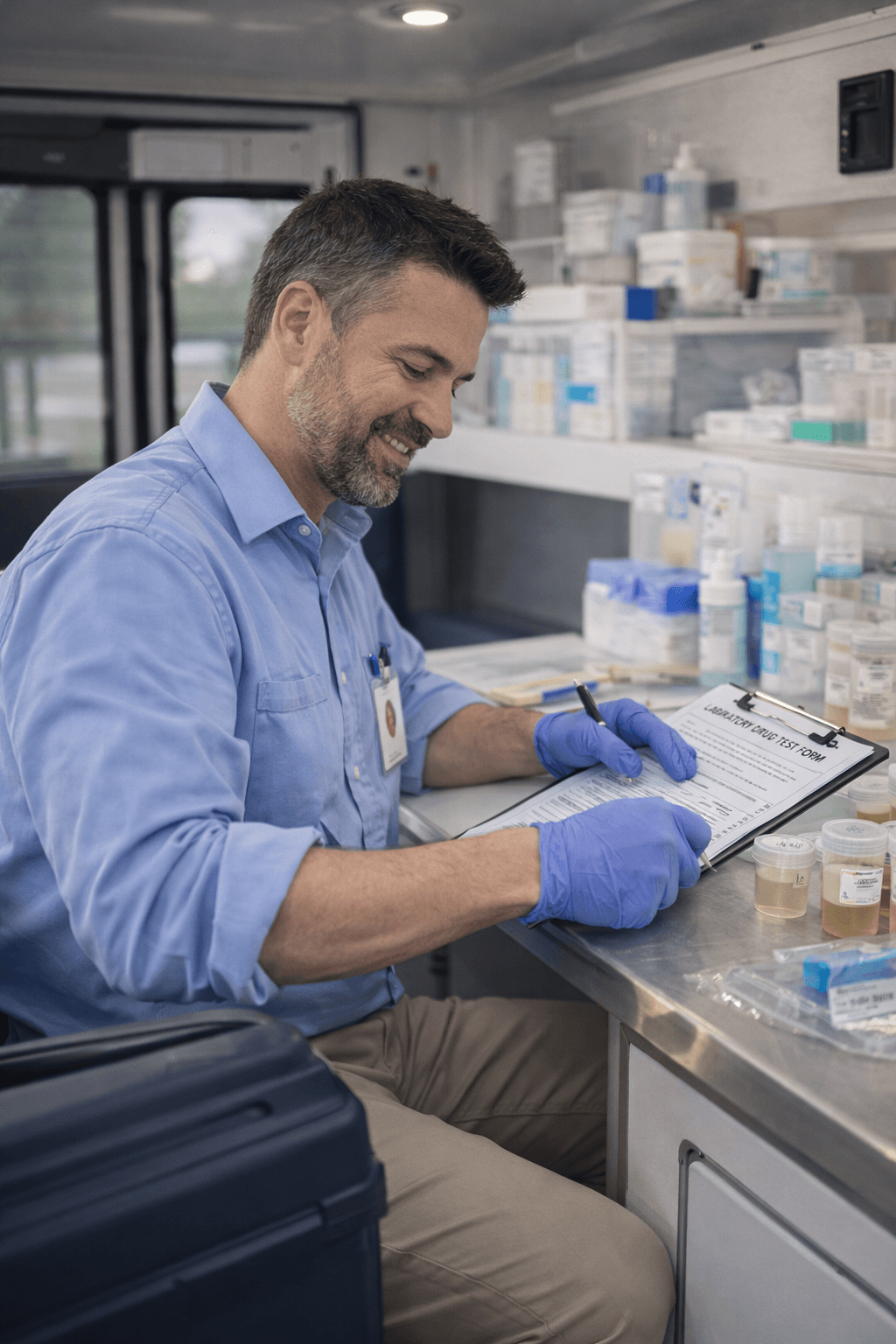
Workplace drug testing that comes to you—qualified collectors meet employees at your site or job location so teams avoid unnecessary clinic trips. Visits are planned around shifts and safety rules for DOT drug testing and Non-DOT drug testing programs alike.
Most employers want the same outcome: certified collectors bring supplies and custody paperwork to your yard, plant, office, or field location instead of routing donors through retail clinic lobbies during production hours.
We execute the panels and chain-of-custody steps your order requires—then coordinate timing, privacy, and gate access with your authorized contact before anyone arrives. Program routing still matters: DOT drug testing and Non-DOT drug testing use different forms and authorities; mixing them creates avoidable errors. For clinic versus on-site tradeoffs, see on-site testing versus local clinics.
Headquartered in Illinois, we nationally coordinate mobile and on-site collections across selected regions and employer locations—availability depends on site, timing, test type, and scheduling. See highlighted counties and coverage planning, regional employer context on the Midwest, Texas Gulf region, and West Coast hubs, and the full locations overview.
How a visit works
Employer-directed collections follow the same backbone whether you call it on-site drug testing or mobile drug testing—the sections below spell out why; this list is the scan-friendly version for HR, safety, and DER handoffs.
- Request and intake — Orders list program type (DOT vs non-DOT), test reason, specimen, and lab or consortium routing; we confirm sites, donor counts, and your primary site contact before dispatch.
- Scheduling — We align a collection window with shifts, gate rules, and realistic flow for the headcount you expect that day.
- Site prep — Private staging, restroom access when urine is on the order, photo ID expectations, and one authorized signer for custody paperwork.
- Collection day — Collectors verify identity, execute the modality on the requisition, and keep the space professional—without supervisors debating policy outcomes at the chair.
- Chain of custody and packaging — Specimens, seals, and BAT documentation (when alcohol is in scope) follow the same standards your program would expect at a clinic.
- Documentation and handoff — Refusals, incomplete events, and completions are recorded so your administrator receives a coherent file; packages route to the laboratory path on the order.
What we mean by on-site and mobile workplace testing
On-site drug testing happens at your facility; mobile drug testing simply means the collector travels to wherever your policy authorizes the collection—same custody standards as a fixed lab site, with scheduling you control. Oral fluid, urine, and breath alcohol workflows follow the order, not the venue.
Supervisors and donors still follow observation and privacy rules for that specimen. If the order is unclear—wrong matrix or wrong DOT vs non-DOT path—we stop and escalate before sealing packages.
DOT, non-DOT, and common test reasons
Employers use mobile and on-site visits across regulated and handbook-driven programs. Random testing programs batch days, Post-accident drug testing windows, and Reasonable suspicion testing same-shift referrals are typical triggers where a coordinated field visit beats scattered clinic trips—subject to collector availability and the timelines your policy or DOT plan defines.
Blended workforces need clear labels on each donor before collectors arrive so paperwork matches the correct program.
Fewer clinic trips and less downtime
Sending employees off site often burns travel time, coverage gaps, and no-shows. Bringing collections to the workplace turns testing into a planned event supervisors can see—usually faster return-to-duty when same-shift completion is authorized.
TPAs and DERs also benefit from batched visits with consistent shipping instructions instead of reconciling one-off clinic receipts after busy quarters.
Who this is for
HR and safety teams running workplace drug testing programs, DERs managing DOT pools, operations leaders protecting shift coverage, and TPAs that need field partners who execute requisitions literally—including employers replacing a clinic-only model with on-site support.
Intake, collection day, and documentation
Intake confirms program type (DOT vs non-DOT), regulated mode when applicable, roster or selection context, site addresses, and lab or consortium routing. We agree on staging, restroom or observation needs, and who signs custody forms.
On collection day, collectors introduce themselves to your authorized representative, follow consistent donor instructions, document refusals or incomplete events, package specimens for your laboratory or BAT path, and leave documentation suited to audit and internal review.
Policy and compliance (high level)
Mobile delivery does not relax federal or state program rules. DOT-covered employees still receive DOT-appropriate procedures; non-DOT donors still need policy-authorized specimens and observation language.
Your DER, TPA, and counsel decide authority and program type; we focus on defensible execution once the order is clear.
Coverage and geography
Feasibility depends on geography, licensing, and staffing. We outline where we routinely operate on the service areas page and keep metro summaries on the locations hub—share addresses during intake so we can confirm coverage before you lock internal dates. Availability still follows scheduling windows and the constraints your policy or DOT plan sets; we do not promise blanket nationwide response from this page alone.
Industries and worksites
Yards, construction and plant floors, warehouses, energy and utility sites, and professional offices all use on-site testing when leaving the job is costly or sensitive. High-volume hiring or annual windows can include multiple collectors—ask when you expect large cohorts in one shift.
Common questions
- Is on-site drug testing the same as mobile drug testing?
For employer-directed collections at your workplace or job site, yes—we treat them as the same operating model: qualified collectors meet you where you work with the correct supplies and custody paperwork. Teams use both phrases when they search; what matters for compliance is program type (DOT vs non-DOT), test reason, and lab routing—not the label on the visit.
- Is mobile testing as defensible as a clinic collection?
Yes, when collectors follow the correct procedures and chain-of-custody rules for your program. The venue changes; the documentation discipline does not.
- Can mobile collections support DOT programs?
Yes, when scheduled with collectors qualified for the DOT modalities and paperwork your mode requires. Share your operating administration (for example FMCSA, FAA, FRA, FTA, PHMSA, or USCG) and DER workflow during intake.
- How much space do we need on site?
We confirm privacy, restroom or oral-fluid observation requirements, and a small staging area with your site lead before the visit. Requirements vary by specimen type and policy.
Request a quote for this program
Request a quote for employer on-site or mobile collections—share sites, shifts, DOT vs non-DOT mix, and typical reasons (random draws, post-accident, reasonable suspicion). We align logistics with your DER, HR, or TPA before collection day.